When Can I Eat Solid Food After Tooth Extraction?
Tooth extraction is a common dental procedure. Many people ask, when can I eat solid food after tooth extraction because they want to recover quickly and return to normal eating habits. While healing times vary from person to person, knowing the right time to eat solid foods can help prevent pain, bleeding, and complications.
This guide explains the recovery process, what foods to eat, what foods to avoid, and how to safely return to your normal diet.
Understanding Tooth Extraction Recovery
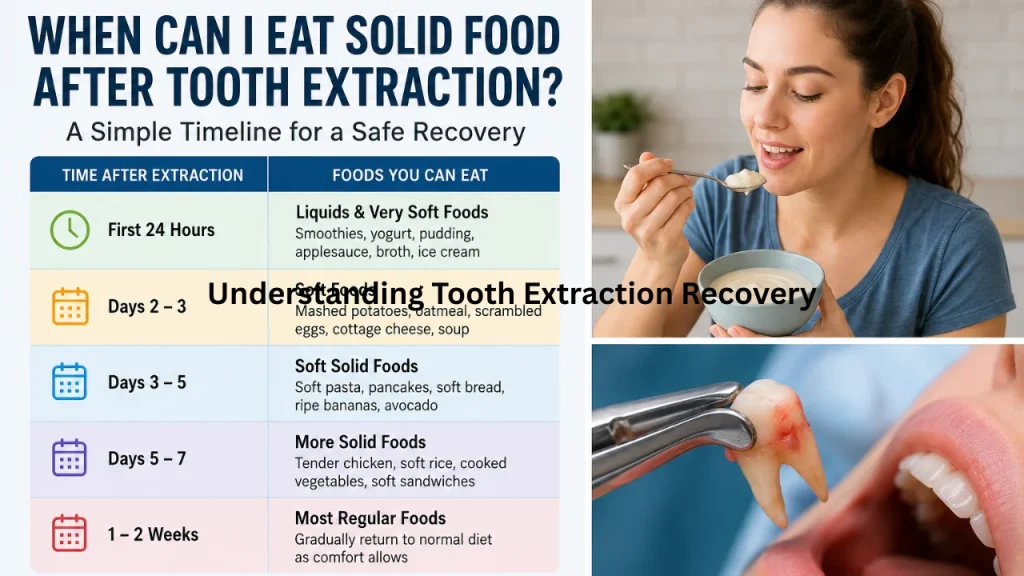
A tooth extraction leaves a small wound in your gum. After the procedure, a blood clot forms in the empty socket. This clot protects the bone and nerves underneath.
The first few days are very important. If the clot becomes loose or falls out, it can lead to a painful condition called dry socket.
Because of this, dentists recommend soft foods and careful eating habits during the early stages of recovery.
When Can I Eat Solid Food After Tooth Extraction?
The answer depends on the type of extraction and how quickly your mouth heals.
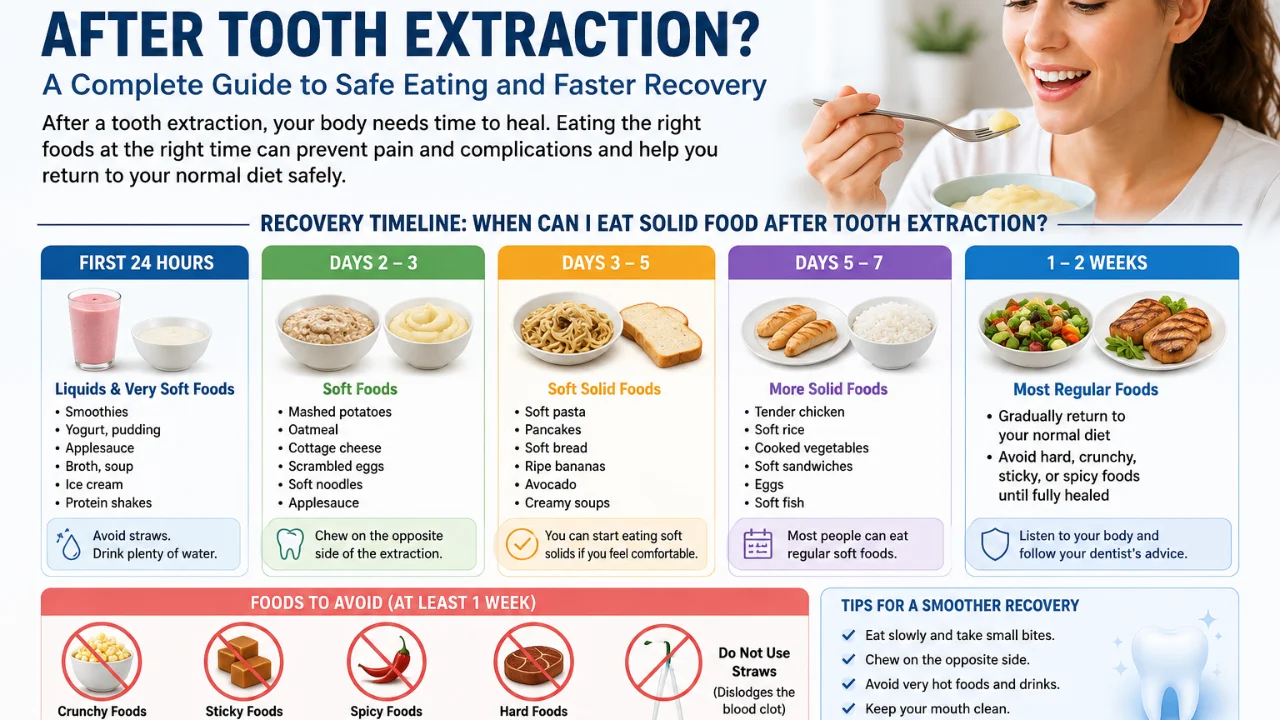
Most people can start eating soft solid foods after 3 to 5 days. Harder foods may require 1 to 2 weeks before they can be eaten comfortably.
Simple tooth extractions usually heal faster than surgical extractions or wisdom tooth removals.
Here is a general timeline:
| Time After Extraction | Recommended Foods |
|---|---|
| First 24 Hours | Liquids and very soft foods |
| Days 2-3 | Yogurt, mashed potatoes, applesauce |
| Days 3-5 | Soft pasta, scrambled eggs, soft bread |
| Days 5-7 | Tender chicken, soft rice, cooked vegetables |
| 1-2 Weeks | Most regular foods if healing is normal |
Always follow your dentist’s instructions because every case is different.
Why You Should Wait Before Eating Solid Foods
Eating solid foods too early can create problems.
Hard foods may irritate the extraction site. Chewing can put pressure on the wound and slow healing.
Small food particles can also become trapped in the socket. This increases the risk of infection and discomfort.
Waiting a few days gives your gums time to recover and helps protect the blood clot.
Foods to Eat During the First 24 Hours
The first day requires extra care.
Choose foods that need little or no chewing. Cool or room-temperature foods are often the most comfortable.
Good choices include:
- Yogurt
- Smoothies
- Applesauce
- Pudding
- Ice cream
- Broth
- Protein shakes
- Mashed bananas
Drink plenty of water throughout the day.
Avoid using straws because the suction can dislodge the blood clot.
Soft Foods to Eat on Days 2 to 3
As healing begins, you can add more soft foods to your diet.
These foods provide nutrition without placing stress on the extraction area.
Popular options include:
- Mashed potatoes
- Oatmeal
- Cottage cheese
- Scrambled eggs
- Soft noodles
- Cream soups
- Avocado
- Soft pancakes
Chew on the side opposite the extraction whenever possible.
When Can I Eat Solid Food After Tooth Extraction Without Risk?
Many people feel comfortable eating soft solid foods around the third or fourth day.
However, this does not mean all foods are safe.
Choose foods that are easy to chew and swallow. Avoid crunchy, sticky, spicy, or hard foods until the extraction site has healed significantly.
If eating causes pain, wait another day or two before trying again.
Your comfort level is often a good sign of whether your mouth is ready for more solid foods.
Best Foods for Faster Healing
Proper nutrition supports the healing process.
Your body needs vitamins, minerals, and protein to repair tissue.
Some of the best recovery foods include:
Protein-Rich Foods
Protein helps rebuild damaged tissue.
Good options include:
- Eggs
- Greek yogurt
- Cottage cheese
- Soft fish
- Tofu
Vitamin-Rich Foods
Vitamins support gum healing.
Try:
- Mashed sweet potatoes
- Avocados
- Bananas
- Cooked carrots
- Blended fruits
Hydrating Foods
Staying hydrated is important.
Choose:
- Water
- Broth
- Watermelon
- Smooth soups
These foods help keep your mouth comfortable while healing.
Foods to Avoid After Tooth Extraction
Some foods can delay recovery or cause pain.
Avoid these foods for at least one week:
Crunchy Foods
Crunchy foods can damage the healing area.
Examples include:
- Chips
- Popcorn
- Crackers
- Nuts
Sticky Foods
Sticky foods may pull on the clot.
Avoid:
- Chewing gum
- Caramel
- Sticky candy
Spicy Foods
Spices may irritate the wound.
Avoid hot peppers and heavily seasoned meals.
Hard Foods
Hard foods require strong chewing.
Examples include:
- Steak
- Raw vegetables
- Hard bread
- Hard candy
Waiting until your mouth heals can prevent unnecessary discomfort.
Signs You Are Ready for Solid Foods
Your body usually tells you when it is safe to move forward.
Look for these signs:
- Reduced swelling
- Little or no pain
- No bleeding
- Comfortable chewing
- Improved jaw movement
If these signs are present, you can slowly introduce more solid foods.
Start with small portions and chew carefully.
Recovery After Wisdom Tooth Extraction
Wisdom tooth removal often requires a longer recovery period.
The extraction is usually more complex than removing a regular tooth.
Many patients need about one week before eating most soft solids comfortably.
Hard and crunchy foods may need to be avoided for two weeks or longer.
Follow your oral surgeon’s recommendations for the safest recovery.
Common Mistakes People Make
Many patients accidentally slow down their recovery.
Avoid these common mistakes:
Eating Too Soon
Rushing back to normal foods can damage healing tissue.
Take your time and follow the recommended timeline.
Using a Straw
The suction may remove the blood clot.
Drink directly from a cup instead.
Ignoring Pain
Pain is your body’s warning signal.
If eating hurts, switch back to softer foods.
Poor Oral Hygiene
Keeping your mouth clean is important.
Gently rinse with warm salt water after the first 24 hours if your dentist approves.
Tips for Comfortable Eating After Tooth Extraction
These simple tips can make recovery easier:
- Eat slowly
- Take small bites
- Chew on the opposite side
- Stay hydrated
- Avoid very hot foods
- Follow your dentist’s instructions
- Rest when possible
Small changes can make a big difference during recovery.
How Long Does Complete Healing Take?
Most people feel much better within a week.
However, complete healing beneath the gums takes longer.
The gum tissue often closes within one to two weeks.
The bone underneath may continue healing for several months.
This is normal and usually happens without any discomfort.
Frequently Asked Questions
Can I eat pizza after tooth extraction?
Pizza is usually too hard and chewy during the first week. Wait until chewing feels comfortable and pain-free.
Can I eat rice after tooth extraction?
Soft rice is often safe after a few days. Be careful because small grains can become trapped in the extraction site.
Can I eat bread after tooth extraction?
Soft bread may be suitable after three to five days if it does not require heavy chewing.
What happens if food gets stuck in the socket?
Food particles can irritate the area. Follow your dentist’s cleaning instructions to remove debris safely.
Can I eat chicken after tooth extraction?
Soft, tender chicken is usually safe after about five to seven days, depending on your recovery.
Conclusion
If you are wondering when can I eat solid food after tooth extraction, most people can begin eating soft solid foods within three to five days and return to a more normal diet within one to two weeks. The exact timeline depends on the type of extraction and your body’s healing process. Eat soft foods first, avoid hard or crunchy items, and follow your dentist’s advice. By being patient and careful, you can recover comfortably and safely return to your favorite meals after tooth extraction.