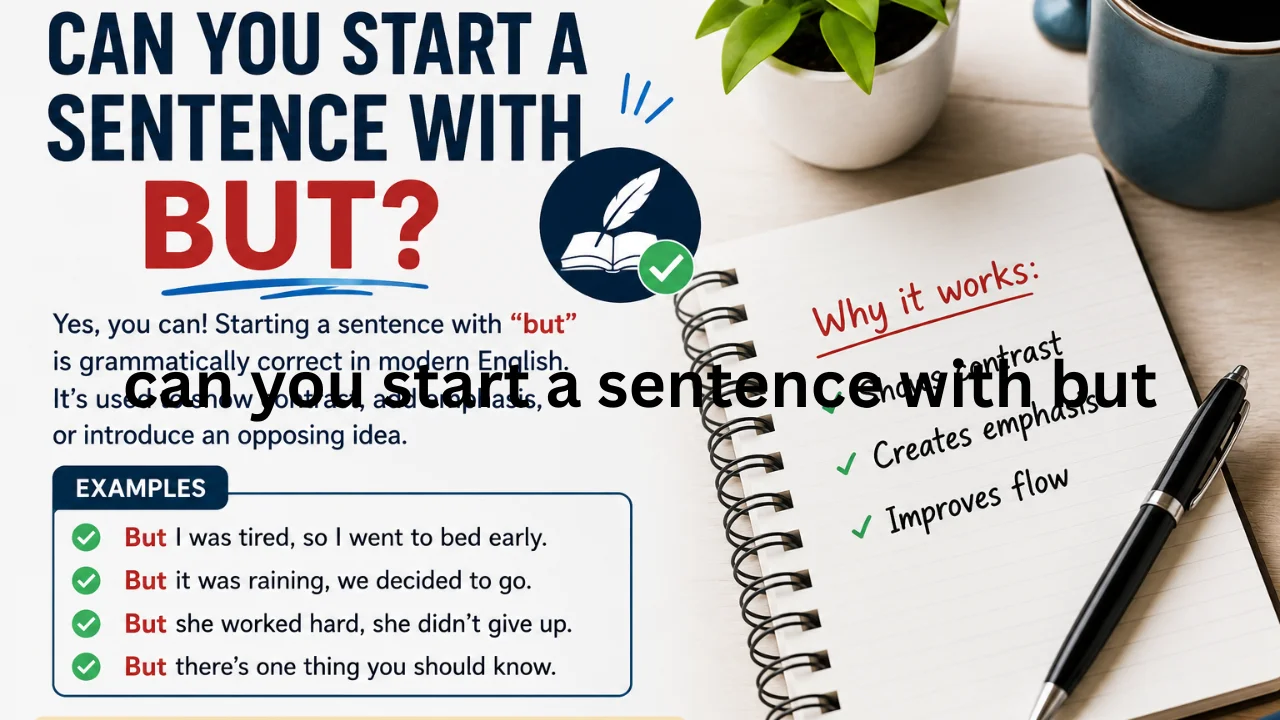
Can You Start a Sentence With But? Yes—Here’s When to Do It
Many people ask, can you start a sentence with but because they have heard that it is a grammar mistake. Teachers, writers, and students often debate this rule. The good news is that modern grammar allows you to begin a sentence with “but” in many situations. In fact, professional writers, journalists, and authors use it regularly to improve clarity and flow.
You May Like: cancer foundation hospital
What Does the Word “But” Mean?
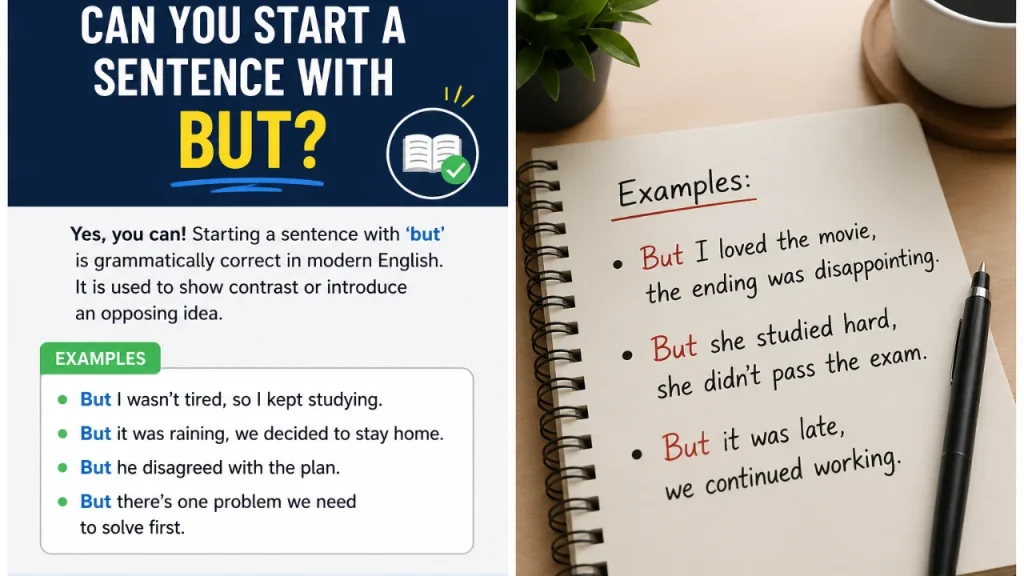
“But” is a coordinating conjunction. It connects words, phrases, or clauses that show contrast between ideas.
For example:
- I wanted to go outside, but it started raining.
- She studied hard, but she did not pass the test.
The word helps readers understand that two ideas are different or opposite in some way.
Although many people think “but” can only appear in the middle of a sentence, modern grammar rules do not support that belief.
Can You Start a Sentence With But According to Grammar Rules?
Yes, you can start a sentence with but.
Most grammar experts agree that beginning a sentence with “but” is completely acceptable. Many style guides and grammar references support this practice.
Starting a sentence with “but” can make writing more natural. It can also help emphasize a contrast between two ideas.
Consider this example:
- The weather forecast predicted sunshine. But heavy rain arrived in the afternoon.
The second sentence clearly highlights the contrast. Readers can easily understand the change in the situation.
Modern English grammar does not prohibit starting a sentence with conjunctions such as “but,” “and,” or “or.”
Why Do People Think You Cannot Start a Sentence With But?
The belief comes from old classroom rules.
Teachers often taught students not to begin sentences with conjunctions because it helped children avoid sentence fragments. This simple rule was easier to teach than explaining all the exceptions.
Over time, many people assumed the rule was an actual grammar law.
However, grammar experts and professional writers have shown that starting sentences with “but” is correct when used properly.
The rule was more about teaching writing skills than enforcing strict grammar.
Can You Start a Sentence With But in Formal Writing?
Yes, you can start a sentence with but in formal writing.
Many academic papers, business reports, books, and newspaper articles contain sentences that begin with “but.”
However, moderation is important.
Using “but” too often at the beginning of sentences can make writing repetitive. Formal writing should maintain a balanced style.
Example:
- The company expected higher sales this quarter. But market conditions changed unexpectedly.
This sentence remains professional and clear.
When writing formal documents, make sure each sentence is complete and meaningful.
Examples of Sentences That Start With But
Looking at examples makes the rule easier to understand.
Here are some correct examples:
- But I was not ready to leave.
- But the results were different than expected.
- But many experts disagree with that opinion.
- But this solution may not work for everyone.
- But the project was completed on time.
Each sentence is complete and expresses a clear thought.
Writers often use this structure to create emphasis and improve readability.
When Should You Start a Sentence With But?
Starting a sentence with “but” works best when you want to show contrast.
It helps readers notice a difference between two ideas.
For example:
- Everyone expected the team to lose. But they won the championship.
The second sentence becomes stronger because “but” signals an unexpected result.
You may also use it when:
- Introducing an opposing viewpoint
- Correcting a previous statement
- Creating emphasis
- Improving sentence flow
- Making writing sound conversational
Situations Where You Should Avoid Starting a Sentence With But
Although it is grammatically correct, there are times when you should avoid it.
Overusing It
Too many sentences beginning with “but” can become repetitive.
Example:
- But I wanted to stay.
- But I had work to do.
- But I felt tired.
This pattern can make writing feel weak.
Creating Sentence Fragments
A sentence must contain a complete thought.
Incorrect:
- But because of the weather.
Correct:
- But because of the weather, we canceled the event.
Using It Without Contrast
The word “but” should introduce a contrast or difference.
If there is no contrast, another transition word may work better.
Can You Start a Sentence With But in Academic Writing?
Academic writing often focuses on clarity and logic.
Many students worry about using “but” because they think professors will mark it as incorrect.
In reality, most instructors accept it when used correctly.
Example:
- Several studies support this theory. But additional research is still needed.
This sentence presents a clear contrast between existing evidence and future requirements.
Always check your institution’s style guide if you have concerns.
Can You Start a Sentence With But in Creative Writing?
Creative writing often encourages flexibility.
Authors use sentence starters like “but” to create rhythm, tension, and emotion.
Example:
- She wanted to tell the truth. But fear stopped her.
The short sentence creates drama and keeps readers engaged.
Many bestselling novels contain sentences that begin with conjunctions.
Creative writers use them to make dialogue and narration sound natural.
Famous Writers Who Started Sentences With But
Many respected authors have started sentences with “but.”
Writers throughout history have used this style because it mirrors natural speech.
Journalists, novelists, and essayists continue to use it today.
The practice appears in books, magazines, newspapers, and online publications.
This widespread use shows that beginning a sentence with “but” is a normal part of modern English writing.
Alternatives to Starting a Sentence With But
Sometimes you may want variety in your writing.
Instead of always using “but,” consider these alternatives:
- However
- Yet
- Nevertheless
- Still
- Even so
- On the other hand
Example:
- The plan seemed perfect. However, unexpected problems appeared.
Using different transition words can improve flow and keep readers interested.
Common Mistakes When Using But
Here are mistakes writers should avoid.
Using But Too Frequently
Repeating the same sentence starter can make writing boring.
Creating Incomplete Sentences
Always ensure the sentence contains a subject and a verb.
Using But Without Purpose
Every use of “but” should create a meaningful contrast.
Ignoring Punctuation
Proper punctuation improves readability and grammar accuracy.
Tips for Using But at the Beginning of a Sentence
Follow these simple tips:
- Use it when showing contrast.
- Keep sentences clear and complete.
- Avoid repeating it excessively.
- Read your writing aloud to check flow.
- Balance it with other transition words.
- Focus on clarity rather than outdated grammar myths.
These practices help create stronger and more professional writing.
Frequently Asked Question
Can You Start a Sentence With But in Formal Writing?
Yes, you can start a sentence with “but” in formal writing. Most modern style guides and grammar experts accept it when it helps show contrast between ideas clearly.
Can You Start a Sentence With But in Academic Essays?
Yes, academic essays can include sentences that begin with “but.” However, it is best to use it carefully and ensure the sentence maintains a professional tone.
Why Do Teachers Say You Cannot Start a Sentence With But?
Many teachers use this rule to help students avoid sentence fragments and writing mistakes. It is a teaching guideline rather than an official grammar rule.
Is Starting a Sentence With But Grammatically Correct?
Yes, starting a sentence with “but” is grammatically correct. Professional writers, editors, and publishers use this style regularly.
Can You Start a Sentence With But in Business Writing?
Yes, business writing often uses “but” at the beginning of sentences to highlight contrasts, explain changes, or present alternative viewpoints.
What Is the Purpose of Starting a Sentence With But?
Starting a sentence with “but” helps emphasize a contrast between ideas. It can make writing more engaging and easier to understand.
Can You Start a Sentence With But and Still Sound Professional?
Absolutely. When used properly, starting a sentence with “but” can improve clarity and make professional writing sound more natural.
Should You Avoid Starting Every Sentence With But?
Yes. Overusing “but” at the beginning of sentences can make your writing repetitive. Use a variety of transition words for better flow.
What Are Some Alternatives to Starting a Sentence With But?
Common alternatives include “however,” “yet,” “nevertheless,” “still,” “even so,” and “on the other hand.” These words also help show contrast.
Can You Start a Sentence With But in Everyday Conversation and Writing?
Yes, people frequently start sentences with “but” in conversations, emails, articles, blogs, and social media posts. It is a natural part of modern English.
Can You Start a Sentence With But? Final Answer
So, can you start a sentence with but? The answer is yes.
Modern grammar accepts it, professional writers use it, and major style guides allow it. The old rule against starting a sentence with “but” was mainly a teaching guideline rather than a true grammar law.
When used correctly, “but” can improve sentence flow, highlight contrast, and make writing easier to read. Just remember to use it thoughtfully, avoid overusing it, and ensure every sentence remains complete and clear. If you follow these guidelines, you can confidently start a sentence with “but” whenever it helps communicate your message more effectively.
People Also Read: emerald coast urgent care